Mother Teresa and the Insurrectionists:
What do Mother Teresa and the January 6th, 2021 insurrectionists in our nation’s capital have in common? Obviously, not much. Mother Teresa (1910-1997) was a Roman Catholic nun widely recognized for her sacrificial Christian service and humility. She stepped away from living in a convent and found her calling to serve the poorest of the poor in India, those with leprosy, AIDS, other maladies and the dying. Meanwhile, some of the insurrectionists espoused Christian nationalism and some carried signs that said: “Jesus Saves,” “In God We Trust,” and “Make America Godly Again.” These messages were carried by a relatively small number of participants, but they received widespread attention and criticism. Many Christian leaders denounced the insurrection as blasphemous, unpatriotic and they argued that such displays were antithetical to the teachings of Jesus Christ. It is clear that there is quite a contrast between Mother Teresa and the insurrectionists.
Religion was once viewed as an overwhelmingly positive force in American society, but perceptions are changing. According to a 2019 Pew Research survey, 55% of Americans believe churches and religious organizations do more good than harm in American society, 20% say it does more harm than good, and 24% say it makes no difference. Regardless of various viewpoints, there is much evidence that Christianity has played an outsized role throughout history, often good but sometimes bad.
Given widely differing perspectives related to Christianity, it is interesting to ask:
-What is the impact on civilization of Christianity and
-what would the world be like if Jesus never existed?
The Topics:
This post examines Christianity’s role within our civilization and our capitalistic system. Implicit in this review is the counterfactual of how our civilization and capitalistic system would be different if there was no Jesus or Christianity. Granted, this is hypothetical, but it is a thought-provoking question.
A number of topics are explored, starting with the Good, the Bad and the Ugly.
To begin, it is important to state that Christianity’s foundation is based on the belief that humans are created in the image of God (“imago Dei”) and have infinite value and dignity. Key attributes include unconditional love, grace and mercy, forgiveness, service, repentance, redemption, and humility. Marriage and the family are paramount.
The post starts with the Good, the Bad and the Ugly, and then delves deeper into a wide range of topics.
This is a Long Read and topics are Bolded so you can scroll down to view the subjects and content that appeal to you.
You can “Jump To” TakeAways & Highlights at the bottom if desired.
Takeaways and Highlights
Topics:
The Bad & The Ugly
The Good
Goodness Multiplier
The Bible’s Impact
Charitable Giving
Slavery and Racial Justice
Historical Legacy
Education
Health Care and Social Reforms
Music, Literature and Art
Missionaries Large Role
Secular Decline
Spiritual Capital
Capitalism Take-Aways & Highlights
The Bad and the Ugly:
When considering the Good, the Bad, and the Ugly, the Bad and the Ugly are covered first.
An examination of the Christian impact on civilization requires recognition and acknowledgement of the negative impact: judgment, hypocrisy, hatred, bigotry, racism, xenophobia, misogyny, greed, child abuse, oppression, homophobia, white supremacy, and anti-Semitism. The scandalous child molestation cases, secrecy and coverup that were first exposed by the Boston Globe’s spotlight investigation in the early 2000s are particularly heinous.
Some critics highlight a narrative where Christians are self-absorbed, materialistic consumers, in a quest for personal satisfaction and self-fulfillment and being blinded by worldly success. Christians are seen as apathetic towards poverty, racial injustice and environmental risks. The critique also includes past support of slavery, ongoing racism and capitalism that increases income inequality. Moreover, parishioners are seen with an inward focus as consumers of church services rather than an outward focus on service and missions. Finally, some describe Christians as narrow-minded and out of touch with contemporary society. These values and behavior are seen as anathema to professed values.
Others point out the Bible’s Old Testament passages that show God’s anger and wrath. Prominent atheists, such as Richard Dawkins, the late Christopher Hitchens, Karl Marx, Sigmund Freud, and Bertrand Russell, have criticized Christianity as a repressive force against the advancement of civilization, an opiate of the masses, a tool of exploitation, an illusion, a crutch, a source of guilt and pathologies, and the principal enemy of moral progress in the world.
Many of these criticisms have merit, but these portrayals often reflect the actions of individuals who identify as Christian, but do not act as Christians. In addition, some of these characterizations are quite subjective and are an unfair representation of Christianity as a whole, and many of these points could be leveled against a broad swath of American society, regardless of their level of religious practice.
Nevertheless, when considering these examples, you might ask what’s to like?
The Good:
Benefits to the individual: Despite various critics, issues and shortcomings listed above, there are significant benefits to both individuals and to society in relation to religious practices and involvement.
For individuals, there are numerous studies showing that religious practices, prayer, meditation, regular worship attendance and forgiveness are associated with greater happiness, longevity, healthier behaviors, reduced stress, greater civic involvement, less depression and less suicide.
For example, Pew Research shows that in the U.S. 36% of the actively religious people describe themselves as “very happy,” compared with 25% of the inactively religious and 25% of the unaffiliated. In addition, people who attend religious services at least monthly often are more likely than those unaffiliated to join other types of nonreligious organizations, such as charities and clubs. Ohio State researchers found similar results as published in the journal Social Psychological and Personality Science. According to the study, Christians who prioritize their relationship with God and engage in positive religious experiences have greater longevity, higher levels of psychological well-being and purpose in life. Religions also promote stress-reducing practices including gratitude, prayer and meditation. Part of the increased longevity came from the fact that many religiously affiliated people had strong social networks, belonged to social organizations and volunteered more. The study was supported by grants from the National Science Foundation and the National Institutes of Health.
The level and type of spirituality also helps with well-being according to Martin Seligman, a well-known positive psychologist, who is Professor of Psychology at the University of Pennsylvania’s Department of Psychology. Seligman differentiated between extrinsic and intrinsic religiousness in his publication “Religion of the Heart: A Study of Intrinsic Religion.” Extrinsic religiousness exists where individuals use religion as a means to achieve external goals, such as social status, material rewards, or social support. In this case, religion is seen as a tool for achieving specific outcomes, rather than as an end in itself. Intrinsic religiousness refers to the extent to which individuals hold religious beliefs and values as personally important and meaningful. In this case, religion is an end in itself, rather than a means to an end. Seligman found a positive link between religiosity, particular religious involvement, and psychological and physical well-being. This included optimism, meaning and purpose, social support and social capital. Seligman says that intrinsic religiousness is more strongly associated with positive outcomes such as well-being, life satisfaction, and happiness, while extrinsic religiousness is more weakly associated with these outcomes, and may even have negative effects on well-being in some cases.
A recent study led by researchers at the Harvard T.H. Chan School of Public Health and Brigham and Women’s Hospital is another definitive analysis that shows the importance of spirituality for healthcare. The study says that spirituality should be incorporated into care for both serious illness and overall health, according to a 2021 article published in the American Journal of Epidemiology entitled Religious Service Attendance and Implications for Clinical Care, Community Participation, and Public Health. The study is part of the Initiative on Health, Spirituality, and Religion at Harvard that focuses on exploring the intersection of health, spirituality, and religion through research, education, and collaboration. This study represents the most rigorous and comprehensive systematic analysis of the modern-day literature regarding health and spirituality to date according to Tracy Balboni, lead author and senior physician at the Dana-Farber/Brigham and Women’s Cancer Center and professor of radiation oncology at Harvard Medical School.
In a blog about the research in Psychology Today and in the Human Flourishing newsletter, Tyler J. VanderWeele, director of that program, noted “strong evidence that religious service attendance was associated with lower mortality risk; less smoking, alcohol and drug use; better mental health; better quality of life; fewer subsequent depressive symptoms and less frequent suicidal behaviors.” He wrote that studies suggest those who attend religious services frequently enjoy a 27% lower risk of dying and 33% lower odds of subsequent depression.
The study, built upon good study designs and rigorous analysis, showed that for healthy people, spiritual community participation — as exemplified by religious service attendance — is associated with healthier lives. For many patients, spirituality is important and influences key outcomes in illness, such as quality of life and medical care decisions. Consensus implications included incorporating considerations of spirituality as part of patient-centered health care and increasing awareness among clinicians and health professionals about the protective benefits of spiritual community participation. Put simply, religious participation is an important determinant of health: it is strongly associated, over time, with a variety of positive health outcomes.
Key findings:
– There is evidence for service attendance being strongly associated with lower mortality, less depression, and lower likelihood of suicide.”
– Religious participation contributes to physical and mental health, and subjective wellbeing, through shaping behavior, creating systems of meaning, altering one’s outlook on life, building community and social support, supporting moral beliefs, and through an experience of the transcendent.
– Communal forms of religious participation, rather than merely private practices, most powerfully affect health.
– Overlooking spirituality leaves patients feeling disconnected from the health care system and the clinicians trying to care for them. Integrating spirituality into care can help each person have a better chance of reaching complete well-being and their highest attainable standard of health.
– Other studies have examined meaning and purpose and the vast majority of these have suggested that various forms of religious participation and service attendance are associated with a greater sense of meaning or purpose in life.
– Research literature suggests that forgiveness itself is closely tied to health.
– Caregiving from religious communities as an important pathway to health and wholeness. The very notion of love as seeking the good of another entails caring for those in need; caring for those who are ill and seeking their health and healing was a prominent theme in its own right.
Interestingly, the study notes that “While causality cannot be definitely established, the evidence that some of the association is causal seems fairly strong.” Numerous mechanisms have been suggested for what might be responsible for the associations between religious participation and health. “Social support, less smoking, lower depression, greater self- regulation, hope and optimism, and meaning and purpose may be potential mechanisms, and some empirical evidence says that some of these might indeed explain some of the relationship.” Other mechanisms suggested that relate religious participation to better mental health include better physical health, comfort from religion, systems of meaning, and relaxation of nervous system through prayer/meditation.
The Harvard analysis shows that religious participation affects health, and that religious institutions play an important role in the provision of health care and public health services. Religious participation, on these grounds, thus ought to be included in discussions of, and analyses of, health, as is already common practice for other social determinants of health such as race, gender, or income. This research was supported by the John Templeton Foundation. In conclusion, numerous studies have shown a relationship between religious activities and regular church attendance and various positive aspects of overall well-being and health. It is important to note that correlation does not equal causation, but some studies do infer causality.
Notable Individuals and Morality: In addition to the benefits listed above, there are noteworthy individual Christians who articulated and demonstrated high levels of morality that lifted up and inspired greater goodness within the overall population. They have provided the benefits of a moral conscience in times of great distress and war by calling out despicable behavior involved in an immoral war. These individuals also help the general population in more mundane, everyday life to aspire to higher levels of behavior.
One exemplary example of moral certitude was Dietrich Bonhoeffer, (1906-1945)a Lutheran pastor, who was strongly opposed to the Nazis. In the biography “Bonhoeffer-Pastor, Martyr, Prophet, Spy,” author Eric Metaxas describes Bonhoeffer’s efforts to overturn Adolph Hitler and the Nazis. Bonhoeffer articulated the concept of “Cheap Grace,” described as faith without works. He said that faith without works is not faith at all, but a simple lack of obedience to God. Bonhoeffer strove to see what God wanted and then to do what God asked in response. He saw this as the obedient Christian life and as the call of the disciple. Cheap grace came with a cost, which explained why so many were afraid to open their eyes in the first place. Bonhoeffer believed that “the antithesis of cheap grace to the Nazi conflict and other moral challenges was a response that required nothing more than an easy mental assent.” (p. 279). Bonhoeffer’s courageous moral character and radical obedience to God meant that he was not able to stand silent and allow the murder of thousands. Bonhoeffer plotted with others to assassinate Hitler, and ultimately the plan was uncovered. Bonhoeffer was found guilty in a conspiracy to assassinate Hitler and was executed shortly before the end of World War II. Dietrich Bonhoeffer’s example helps Christians to aspire to a higher level.
Another notable example is Corrie ten Boom (1892-1983), who risked her life to protect Jews hunted by the Nazis. She eventually suffered a loss of health and her family in a concentration camp. Nevertheless, she demonstrated unconditional love and forgiveness of Christ towards even the Nazis. In her example, Corrie challenges us all to a higher level of service. Ephesians 4:32 says: Be kind and compassionate to one another, forgiving each other, just as in Christ forgave you.
The steady drumbeat of negative and sensationalized media can cheapen our culture, it can tear at our social fabric and breakdown our civic norms. It can leave us numb and blind us to the altruistic actions of individuals like Bonhoeffer and ten Boom. Their uncompromised belief and selfless service provide inspiration to everyone, and they are excellent examples showing the goodness of Christianity.
Uplifting Testimonies: Not everyone is able to lead a life like Bonhoeffer or ten Boom, but there are many everyday heroes. Life is not always easy, and many people endure extreme hardship, tragedy and heartache. Despite these obstacles, many share personal narratives chronicling their challenges and heartaches, detailing their lives before Jesus and the profound transformation they experienced afterwards. These individuals have changed priorities and changed lives and they go forward to more joyful and uplifted lives. Sometimes they go on to help change the lives of those around them or the world. These testimonies serve as sources of inspiration for individuals seeking joy, a new self, and redemption. This is not to say that all things work out fine for Christians, but these testimonies can help lift us up and motivate us to a higher level.
Christianity Today features personal testimonies of redemption in each monthly issue, with individuals sharing their stories of life before and after accepting Jesus. See Christianity Today’s Top Testimonies of 2022.
Benefits to Society:
In addition to individual benefits, there are significant benefits to society as a whole from the practices of Christian institutions and individuals. Down through the ages Christianity has played a role in ending practices such as human sacrifice, infanticide, polygamy, incest, and abortion. Christian teachings on sexuality have condemned marital infidelity and supported marriage and family life. The teachings of Jesus, such as the Parable of the Good Samaritan, and the Prodigal Son provide a fundamental basis and moral code for Western notions of mercy, human-rights and welfare.
One current example is the role of Christians in helping fund the fight in developing countries against HIV/AIDS, helping millions gain access to life-saving treatment. Other examples include advocating for persecuted religious minorities and fighting sexual trafficking. Christians have also provided foster families, visited prisoners, and championed criminal justice reform and the rights of unborn children. According to Michael Gerson and Peter Wehner, in an article in the November 2015 Christianity Today publication, Christians are irreplaceable sources of compassion, providing services and comfort to suffering people at home (e.g. Catholic Charities) and abroad (World Vision). They are known for healing rather than judgment and finding pathways for grace and healing.
The caricature of Christians as being judgmental ignores the central message of love and compassion that is at the heart of the faith. Christians are called to love their neighbors, to forgive those who wrong them, and to extend grace and mercy to all people. There are uncounted examples, and there is much to recommend it.
Historian Tom Holland’s book, entitled “Dominion: How the Christian Revolution Remade the World,” sums up the point that Jesus’ ethics changed the world by being on the forefront of universal human rights, caring for the poor, justice for the oppressed and equality for men and women. Holland, who is not a Christian, says that this was not part of the Greek or Roman legacy. He says the origins for this principle do not originate with the French Revolution, the Declaration of Independence or the Enlightenment, but in the Bible.
So, whether examining academic research, reviewing outstanding individuals like Bonhoeffer and ten Boom, or seeing everyday heroes, there are a multitude of examples showing the benefits and goodness of Christianity.
Goodness Multiplier:
The process of contributing to a better world leads to the concept of the “Goodness Multiplier.” The cumulative impact of people doing good can compound itself with even more good. The goodness multiplier is based on the idea that positive actions and choices by individuals can have a ripple effect, leading to increased levels of happiness, success, and well-being for both the individual and those they come into contact with. This positive feedback loop is often associated with positive psychology and the promotion of positive behavior and values. The idea is that when people behave in a good and virtuous manner, this creates a “multiplier effect” that leads to further positive outcomes in the lives of others. It becomes a positive contagious and self-reinforcing effect, a virtuous circle.
A quasi-mathematical approach to the Goodness Multiplier is summarized by CBS correspondent Steve Hartman and his “On the Road” series. Hartman’s “The Gift: Kindness Goes Viral” is a YouTube video showing individuals demonstrating kindness, and how this propagates more broadly to other people. The video shows that an act of kindness might in fact create enough of a “wave of good will” to change the world. In this video, Hartman works with Professor Anette Hosoi of MIT to apply a quantitative approach to his thesis. Hosoi utilizes basic math depicted on a chalk board to show how one act of kindness might grow exponentially and positively impact the world. It is paying it forward and it shows how goodness begets goodness. This video has gone viral and can be seen here.
This is not explicitly a Christian post, but it demonstrates the power of Christian principles within a secular setting and it helps restore faith in humanity. To see Professor Hosoi in the video go to the 8 minute mark and again to the 31 minute mark.
While goodness is not limited to Christianity, the Goodness Multiplier greatly expands the good works espoused by Christianity.
The Bible’s Impact:
The Bible is the most published book in the world and it serves as the basis for spiritual guidance and truth for Christianity and the Christian impact. Given the Bible’s ubiquity, there are both supporters and detractors related to its relevance and impact. A common complaint, especially by atheists, and a concern of practicing Christians is the difference between the Bible’s Old Testament and the New Testament. The Old Testament, also known as the Hebrew Bible, is the foundational text of Judaism and it provided the historical and religious context for the emergence of Christianity. The Old Testament preceded Christianity during the time of roughly 2000 BC to 400 BC and it contains the law, the prophecy, history, poetry, etc. It highlights the Ten Commandments as the moral code during an era that was much more savage and brutal than today. The Old Testament often shows sin that invokes God’s anger, wrath, judgment and punishment and these factors identify perceptions of Christianity today.
The late Rachel Held Evans in her book “Inspired” explains how the Bible contains allegorical language and needs to be understood within the context of the times in which it was written. In an ancient world that often celebrated violent indulgence, the law offered a sense of stability and moral purpose. “An eye for an eye and a tooth for a tooth may seem as barbaric endorsements of revenge, but within its cultural context this defined example of “retaliation” represented a deliberate move away from excessive punishment allowed in other tribes by limiting retaliatory action to judicious, in-kind responses. In other words, you can demand restitution for your loss, but no more; this is about justice, not revenge.” (p. 53)
Andy Stanley’s book “Irresistable” makes a similar claim: “The civil and religious law detailed in God’s arrangement with Israel was superior in every way to the civil and religious law of the surrounding nations…. The protections afforded to the most vulnerable were nothing short of revolutionary in their original context. Women, servants, foreigners, and children all fared better under Jewish law than did their counterparts in the surrounding nations. The Sinai covenant was a perfect arrangement within a specific cultural setting in light of God’s purpose for the nation and for the world.” (p. 95) Stanley goes on to say that “God is love is a uniquely Christian idea. Pagan gods were jealous, fickle, capricious and entertained themselves by trifling in human affairs.” (p. 223)
For some, the Bible is often described as contradictory. Many scholars believe it is more appropriate to view the Bible as a library with a multitude of authors and wide-ranging contexts. As such, it offers no simple answers, but rather broad guidelines. God gave various diverse writings to avoid simplistic solutions to complex problems. As such, the Bible requires discernment and interpretation related to various points of view and perspectives.
New Testament Revolution: The Bible’s New Testament, with its emphasis on unconditional love, grace and mercy, is starkly different from the Old Testament. The New Testament covers the time from Jesus’ birth at around 5 BC to approximately 70 AD, a roughly 75-year span. It built upon the foundation of the Old Testament and it provided the basis for the Christian faith. Many of the central themes and characters of the Old Testament, such as the story of Moses and the Israelites, were important to the early Christians. The New Testament, which is comprised of the Gospels (good news), the letters of the apostles, and the Book of Revelation, tells the story of Jesus of Nazareth, who was the Son of God and the savior of humanity. It provides a transition from the Old Testament by fulfilling the prophecies and promises made in the Old Testament, such as the coming of a Messiah, and by providing a new covenant between God and humanity through the ministry, death and resurrection of Jesus Christ.
Christianity is unique among major religions because it is faith-based rather than works-based. Christianity emphasizes the concept of grace – the idea that salvation is a gift freely given by God, not something that can be earned through good works or merit. It is also based on the centrality of love and the importance of forgiveness. Christians are taught to love their neighbors as themselves and to forgive others, even their enemies. An example of the evolution from the Old Testament to the New Testament is shown/seen by Jesus’ statement: You have heard an eye for an eye, but I now tell you to turn the other cheek. Matthew 5:38-39, and whoever would be great, must be your servant from Matthew 20:26.
One controversial aspect of the New Testament regards the Apostle Paul’s command for wives to submit to their husbands as recorded in Ephesians 5:22. A general reading of Paul shows a patriarchal society that subordinates women. But, just like in Old Testament passages, there is a need for consideration and context. Many note that Paul’s message of submission (in Ephesians 5:22) goes both ways, and in the earlier verse (Ephesians 5:21), Paul writes, “Submit to one another out of reverence for Christ.” Stanley’s “Irresistable” says “It’s impossible to overstate the elevated status women enjoyed in the early church. The notion of mutual submission within marriage was unheard of until the birth of Christianity. It’s a uniquely Christian idea.” (p. 215)
This can be read as mutual submission and love in a Christian marriage. There are various interpretations that suggest the Apostle Paul’s statement about wives submitting to their husbands can be seen as quite liberal for the time it was written. In Paul’s other teachings he advocated for the spiritual equality of men and women and encouraged women to play important roles in the early Christian church. Some argue that these teachings mean that Paul was more progressive for his time on gender than many of his contemporaries. Galatians 3:28 says there are neither Jew nor Greek, slave nor free, male nor female, for you are all one in Christ Jesus.
In summary, the role of the Bible can be seen as revolutionary for its time and timeless for our current culture. It provided a basis for moral behavior that has stood the test of time and impacted the world.
Charitable Donations By Individuals:
Research has consistently shown that religious individuals give more to charity than those who are not religious. In addition, religious organizations themselves are often major providers of charitable services, including education, healthcare, and disaster relief to address social and humanitarian needs.
According to the Barna Group, the data is clear: the church is leading the world in charity.
Barna’s report, The Giving Landscape, published August, 2022, shows that 90% of practicing Christians have given to charity in the past year. Practicing Christians are self–identified as people who attend church at least once a month and describe their faith as important to their daily life. Non-practicing Christians fall more in line with the national average on giving, while a slight majority of non-Christians do not report any charitable donation.
Similar results were found by the Giving USA foundation of the Lilly Family School of Philanthropy at Indiana University. Their research shows that religiously affiliated people are more likely to make charitable donations, whether to a religious congregation or to another type of charitable organization of any kind. In addition, the Almanac of American Philanthropy says that regular attenders of religious services give to secular causes at a much higher rate than who don’t attend religious services. These findings suggest that religious communities may have a greater sense of social responsibility and are more likely to engage in acts of charity.
Institutional examples of Christian Charity:
Charitable giving by individuals is a major source of giving, but there are numerous examples of Christian charitable institutions:
-William Booth, a Methodist minister, established the Salvation Army in 1865.
-Henri Durant, a Swiss humanitarian, founded the Red Cross in 1859.
-The Young Men’s Christian Association-YMCA was founded to develop Christian values in 1844.
-World Vision was founded in 1950 to promote child sponsorship and help regions affected by disaster, poverty and famine.
-The Church Mission Society (formerly known as the Christian Missionary Society) taught 200,000 to read in East Africa in one generation, secured the abolition of widow-burning and child sacrifice, brought medicine to the world and advanced educational systems in China, Japan, and Korea.
There are innumerable charitable organizations, mission agencies, parachurch groups, medical personnel, teachers and other volunteers, but the organizations listed above provide representative examples.
My Cornerstone website includes additional charitable information and here.
To summarize, research has shown that individuals who are active in religious communities tend to give more to charity than those who are not religious. Additionally, religious communities often provide support and resources for charitable giving, which can increase the total amount of contributions made.
Charity is a virtue, and this is a category with many good actors
You could say the research shows a charitable philosophy that says you can’t take it with you, but you can send it on ahead.
Slavery & Racial Justice:
Slavery has been a global institution going back thousands of years, and it has been a significant moral issue for the church. Although Christianity has played a largely positive role related to slavery throughout history, and especially through the abolitionist and Civil Rights movements, there were some elements of Christianity that supported slavery and segregation.
The Bad Behavior: Southern Christian slaveholders during the antebellum period before the Civil War justified the enslavement of African Americans by using passages of scripture that they interpreted to support slavery. There were also a combination of cultural and economic arguments as well that were used to rationalize the enslavement.
Although the institution of slavery was legally abolished through the ratification of the 13th Amendment after the conclusion of the Civil War in 1865, the sinister effects of slavery and racism continued. Almost immediately after the Civil War, state and local Jim Crow statues essentially legalized racial segregation. Moreover, the Ku Klux Klan emerged to intimidate and maintain 2nd class citizenship and marginalize African Americans by maintaining and enforcing racial segregation.
The Good Behavior: While slavery was part of cultural value system on a global basis, the church played a major role through the Abolitionist movement to end slavery and reduce racial injustice.
Key events and people: William Wilberforce(1759-1833) started the abolitionist movement in England based on his Christian convictions. His determined efforts over a period of 18 years resulted in the elimination of the slave trade in 1807. After the elimination of the slave trade, he continued his long, persistent fight and slavery itself was finally outlawed in Britain in 1833, just days before he died. An interesting side note is that the song “Amazing Grace” was written in 1772 by Englishman John Newton, a one-time slave trader who transformed his life to God’s service and was ultimately ordained as an Anglican priest. He became a spiritual adviser to William Wilberforce and he fought alongside William Wilberforce to end the slave trade. Christian values were a key source and a notable biblical passage comes from Galatians 3:28 which says there is neither slave nor free, male nor female, for you are all one in Christ Jesus.
The Christian Church played a key role in the abolition of slavery in the United States as well, with many denominations and individual Christians advocating for the end of slavery and supporting abolitionist movements. A major abolitionist catalyst was Harriett Beecher Stowe’s “Uncle Tom’s Cabin,” published in 1852. Harriet, was a daughter of a preacher, she was married to a preacher, and all her brothers were preachers. Her book impacted people in both North and South, and was described as a verbal earthquake. Southerners hated the book, as it advocated for an end to slavery.
Her book reiterated the profound value of a human soul, and it became one of the most influential novels ever published. It made emancipation inevitable and became a major factor contributing to the American Civil War. “So this is the little lady who made this big war,” said Abraham Lincoln upon meeting her for the first time. Her book was the first great American bestseller. Although during the Civil War, both the North and the South cited religious support, President Abraham Lincoln said it best: “My concern is not whether God is on our side,” he said. “My greatest concern is to be on God’s side.”
Despite the legal end of slavery, segregation and discrimination and racism persisted. After World War II, a new awareness of the evils of racism led to the U.S. Civil Rights Movement. The Civil Rights Movement of the 1950s and 60s was a significant moment in history and was based on a nonviolent strategy that showed the incredible role the Bible played. Many Christians, including ministers and activists, played a key role in advocating for equal rights and social justice for African Americans. Martin Luther King Jr’s. rhetoric drew on biblical teachings including Matthew’s Gospel which recounts Jesus’ teaching nonviolence.
Based on early Civil Rights efforts, the U.S. Supreme Court in 1954 ruled in Brown v. Board of Education that separate-but-equal segregation in education was unconstitutional. Despite the Supreme Court ruling, segregation, discrimination and racism continued. As a result, the Civil Rights Movement continued to work for the rights of Black Americans. Prominent examples include the Freedom Riders who rode public buses in order to challenge segregation laws, Rosa Parks and many other foot soldiers who counted on their Christian faith to give them courage to fight against racism. Black churches and black preachers also played a key role.
In 1964, President Lyndon B. Johnson signed the Civil Rights Act, which legally ended the segregation that had been institutionalized by Jim Crow laws. And in 1965, the Voting Rights Act halted efforts to keep minorities from voting. The Fair Housing Act of 1968, which ended discrimination in renting and selling homes, followed. It is unfortunate that this legislation occurred 100 years after the Civil War. It is even more unfortunate that, despite this legislation, segregation, discrimination and racism continued to persist.
Racism and discrimination were being fought not only in America, but globally as well. Nelson Mandela (1918-2013), an anti-apartheid activist and politician led a highly visible fight in South Africa. He served 27 years in prison (at times in a cell 8’ by 7’, but upon release from prison he declared his commitment to peace and reconciliation. He became an icon of democracy and social justice and served as the first president of South Africa from 1994-1999. He left a legacy of racial reconciliation, and became one of the most profoundly influential people in the 20th century.
Over time, Americans came to understand that slavery violates the Christian concepts of infinite worth of the soul and we are all created in the image of God. Nevertheless, it took until 1995 for the Southern Baptist Convention to renounce racism and to apologize to African Americans for its history of supporting slavery and advancing segregation. The apology stated that the intolerant past was not a true representation of Christianity.
Although the legal and legislative achievements in America were helpful, progress against racism was slow and it proved to be a long and winding road. The murder of George Floyd in 2020 demonstrated the recurring nature of racism. Cell phone video of his death went viral and triggered a groundswell of outrage and activism by religious leaders and faith-based groups and others across the United States, reminiscent of the 1960s civil rights movement. A greater awareness of racism and discrimination by individuals and institutions developed as church pastors denounced racism and held interracial prayer services. The heightened awareness of racism resulted in statues linked to slavery to be taken down, Confederate flags were removed from government properties and many racially insensitive or inappropriate messages were taken down from social media.
In the wake of the outrage, Jemar Tisby, MDiv. and PhD in history published “How to Fight Racism: Courageous Christianity and the Journey toward Racial Justice.” In this book, Tisby says Christians have a responsibility to fight racism, as it is incompatible with the teachings of Jesus and the gospel. He goes on to say that “White people tend to grow up with a “colorblind” mentality, meaning they are taught to not “see color,” and that the only way to treat everyone equally is to pretend that everyone is the same.” (p. 48) He says that people need to courageously continue down the path of racial awareness so that colorblindness eventually gives way to color-consciousness. The growing awareness helped many discern personal blind spots of racism by shining God’s loving light on the sinful darkness of racism in hearts, heads, homes-and even in churches.
These events and history show the church has sometimes been complicit in slavery in the past, and in continuing racism today. However, the church has also played an outsize role in ending slavery and helping to advance racial justice.
Historical Legacy:
The Judeo-Christian impact covers a 4,000-year legacy of major influence within the world, it has outlived all powerful rulers and dynasties, and Christianity became the largest religion at over 30% of the global population. During this time there were various civilizations with moral codes, and the Judeo-Christian legacy certainly had no monopoly on virtue, but it did have a unique position relative to the centrality of love. John Dickson’s “Bullies and Saints” points out that universal love is not in the Code of Hammurabi, the ethics of Plato and Aristotle, the maxims of Delphi or the discourses of Seneca, Epictetus, or Plutarch. He explains that “there is hardly a mention of love mercy, humility or non-retaliation.” (p. 27) The Golden Rule is a universal ethical insight, but love your enemies is unique to Christianity.
Moreover, Imageo Dei declares that each person is created in the image of God, and it lies at the heart of the Christian view of human dignity. Ancient Jews and Christians believed every man, woman, and child was inherently and equally valuable because they bear the image of God. The application of these principles meant that early Christians also stood in opposition to infanticide, the degradation of women, gladiatorial combats, and slavery.
Christianity, with roots in the Bible’s Old Testament, started with the ministry of Jesus and expanded rapidly, especially after his death and resurrection. The apostles Paul, Peter, and others risked martyrdom as they preached in their evangelical missionary work and as they wrote epistles to their converts. Through their efforts, the nascent Christian movement spread quickly through Cyprus, Asia Minor, Macedonia, Greece, Rome, Crete, Spain and other regions.
After Jesus was crucified on a cross, the apostles were completely demoralized. The death of their leader drained their energy and critics made them out to be fools tricked by a charlatan. The resurrection of Jesus on Easter, however, ignited their faith as they came to more fully comprehend his revolutionary mission of love, grace, mercy, service and of salvation.
Their reaction to Jesus’s resurrection became the greatest testimony to belief in a risen Christ. Their witness of Jesus life, death and resurrection led them to evangelize with undaunted passion and most were martyred for their faith. Their spiritual energy and fervorto die evangelizing speaks volumes to support the reality of Christ’s resurrection. It is highly improbable that the apostles and other Christian converts would dedicate their lives, and become martyrs for a dead leader. Although persecution and martyrdom do not constitute proof, these events provide a convincing rationale of Jesus’ resurrection from the dead and for his promise of eternal life for his believers. It is a compelling example of human nature being energized by this miraculous event, and it serves as a challenging question for skeptics, agnostics and atheists to ponder.
The spread of Christianity was phenomenal. These early Christians, emboldened by their understanding of Jesus’ revolutionary mission, were persecuted by Jews and then by Roman Emperors. The Roman emperor Nero was particularly infamous for killing Christians, but it only caused even more to endure persecution and became martyrs for their faith. Persecution and martyrdom caused Christianity to grow at an even more explosive rate and it is estimated to have grown to roughly 30 million followers by AD350.
Part of the rapid spread of Christianity is explained by the conversion of Roman Emperor Constantine (272-337) to Christianity. After his conversion, the Edict of Milan was issued in 313, an event which provided religious freedom for all religions and treated Christians benevolently within the Roman Empire. This paved the way for Christianity to become the official religion of the Roman Empire in 380 under Emperor Theodosius 1. The transition from paganism to Christianity brought half of the Roman Empire under the political and social influence of Christianity.
The construction of roads by the Roman Empire also had a significant impact on the spread of Christianity. The Roman roads were built with a remarkable level of engineering expertise, allowing for efficient travel throughout the empire. This made it easier for early Christians to travel and spread their message to new regions. The Roman roads were also important trade routes, and Christian merchants and travelers were able to move along them and establish contacts with other Christian communities, further contributing to the spread of the religion.
Charlemagne (748-814) was a key leader who caused the rapid spread of Christianity. Charlemagne also known as Charles the Great, was a Frankish king who ruled much of Western Europe from 768 to 814. By 800, Pope Leo III crowned Charlemagne as Holy Roman Emperor. This was significant because during the Middle Ages, the church and secular rulers were often closely related.
Charlemagne’s leadership helped create a unified Europe and he is sometimes called the Father of Europe. He instituted political and judicial reforms that were sometimes referred to as the Christian Renaissance. Charlemagne advanced education and literacy, promoted economic and legal reforms, and protected the poor. Charlemagne strongly supported Christianity and facilitated its expansion. It must be noted that he sometimes used strong-arm tactics to force Jews and Muslims to convert to Christianity or face persecution.
As the Catholic Church evolved and Christianity grew, historian Geoffrey Blainey characterized the Catholic Church’s activities during the Middle Ages as an early version of a welfare state, providing hospitals for the old, orphanages for the young, hospices for the sick, and hostels or inns for pilgrims.
Great Thinkers Impact:
St. Augustine (354-430) was a bishop, philosopher, and theologian who significantly influenced the development of Western Christianity. His early life of sin and heresy was transformed into a life as a devout Christian. His writings, including his “Confessions” and “City of God,” cover the power of grace, the role of free will, and the relationship between faith and reason. His writings helped Catholicism to flourish and have had a significant impact on theology and Western philosophy.
St. Thomas Aquinas (1225-1274) was a Catholic priest, philosopher, and theologian, known for his works “Summa Theologica” and “Summa Contra Gentiles.” He believed in a rational approach to theology and used reason to understand and interpret religious beliefs to yield a more systematic and rational approach to theology. His contributions to the development of moral theology have had a lasting impact on the Catholic Church, and his contributions to Christian theology and philosophy continue to be widely studied and debated.
Ignatius of Loyola: Ignatius of Loyola (1491-1556) was a Spanish Catholic priest and theologian who founded the religious order of the Society of Jesus (The Jesuits) for missionary work and teaching. Jesuits took vows of chastity, obedience, poverty and self-denial. His Spiritual Exercises became known as Ignatian Spirituality. He was inspired by the example of Francis of Assisi and other great monks. Ignatius was beatified by Pope Paul V in 1609 and canonized by Pope Gregory XV in 1622.
Crusades:
The Crusades represent another chapter in Western civilization. Prior to the Crusades, Emporer Constantine believed that the Roman Empire had become too big to be administered efficiently and moved the capital 800 miles east of Rome in 330 to the city of Byzantium, and named it after himself-Constantinople, modern day Istanbul. This became the Eastern Roman Empire. Over time, the Great Schism of 1054 marked a major split in the history of Christianity between the Roman Catholic Church based in Rome and the Orthodox Church in the East. The two regions had developed distinct cultural, political, jurisdictional and theological differences and it became difficult to remain united.
Meanwhile, the expansion of Islam increasingly controlled territory in the Eastern Orthodox Church, including Jerusalem. In an effort to retain Christianity in the East, the Eastern Orthodox Church in Constantinople requested aid from the Christians of Western Europe. In response, Pope Urban II called for a Crusade in 1095 to re-take the Holy Land from Muslim rule. Although initially a noble venture that achieved some territorial gains, (including Jerusalem for 90 years), the Crusades continued for over 300 years into the 1400s. During this time period, church leaders essentially weaponized the Crusades and there were atrocities on both sides. The Crusades eventually lost momentum and resulted in defeat for Europeans and victory for Muslims. Many argue that the Crusades actually extended the reach of Christianity and Western civilization.
The Spanish Inquisition, starting in the 1400s and continuing for over 350 years, utilized torture and even cruel burnings at the stake to combat heresy and to consolidate the power of the Spanish monarchy. The brutality of the Spanish Inquisition became an important factor in the Protestant case against the Catholic Church. Various estimates put the inquisition’s death toll at perhaps 6,000 over the three-century time span. Although certainly no justification, it should be remembered that Josef Stalin killed an estimated 15-20 million people and Mao Zedong over 40 million. Even the Khmer Rouge led by French-educated Pol Pot caused the death of 2 million people in the genocide in Cambodia. The Spanish Inquisition was a blighton church history and Pope John Paul II publicly apologized for them in March 2000.
Christianity and religion are often rightfully listed for their role in various “Holy Wars,” but it is worth noting that more people died under in the 20th century as a result of godless ideologies than had perished in all of Western civilization’s religious wars put together.
Protestant Reformation:
The Protestant Reformation was a significant event in European history that brought about numerous positive changes. Despite Christianity revolutionizing Western religion, there was growing concern related to the increasing wealth, power and secularization of the Catholic church. Major issues emerged including corruption, nepotism, sexual misconduct among the clergy, abuse of power by church leaders, and the sale of indulgences. All these taken together contributed to the increasing disillusionment with the Catholic Church.
The Protestant Reformation was spearheaded by Martin Luther with the publication of the 95 theses in 1517, bringing several important benefits and changes to Europe. Luther advanced the doctrine of the priesthood of all believers, emphasizing individual interpretation of the Bible and religious freedoms. He also advocated a separation of religious and worldly realms and upgraded the role of laymen within the church, obligating them to use reason to govern the worldly sphere in a rational way. The establishment of new protestant denominations, the promotion of education and literacy, and the reduction in the power and wealth of the Catholic Church were other significant outcomes of the Protestant Reformation.
John Calvin, another key figure in the Protestant Reformation, believed in a separation of powers through a system of checks and balances. He also strengthened the support for democracy by supporting elected laymen within his representative church government. He was also well known for supporting a strong work ethic. Calvinists and Lutherans developed a theory of resistance that was called the doctrine of the lesser magistrate. This framework was later utilized in the American Declaration of Independence. This doctrine resisted political absolutism and supported the development of modern democracy.
Key developments of the Protestant Reformation can be summarized as:
-The development of democratic ideas, as rulers were increasingly seen as accountable to their people rather than to the Church.
-The promotion of education and literacy, as the printing press made the Bible and other religious texts widely available.
-The creation of a more pluralistic and diverse religious landscape in Europe and the proliferation of new denominations.
-The spread of ideas related to individualism, capitalism, and the scientific revolution.
These changes had far-reaching effects, contributing to the development of modern Western society and shaping the course of world history.
The Protestant Reformation proved to be a watershed event leading to modern democracy. The ideas of Martin Luther, John Calvin, and others paved the way for the development of democracy in England and America. It is worth noting that all of these men wrote before John Locke published his “Two Treatises of Government.” Calvin’s impact was profoundly influential in America where an estimated 55 percent to 75 percent of white citizens in this era associated themselves with Calvinist churches, and members of the tradition were significantly overrepresented among American intellectual elites.
Christian Impact in America:
The Protestant Reformation liberated Christian’s perspective regarding the role of government controls and persecution and this trend continued with the establishment of colonies in North America.
The Pilgrims were a group of separatist Puritans who in 1620 fled from religious persecution by King James 1 of England. They established the Mayflower Compact, a social contract that was the first governing document of Plymouth Colony. It was an agreement to make their own “just and equal” laws for their common good.
The Puritans were another Puritan group who established the Massachusetts Bay Colony in 1628.
The Puritans believed in the idea of personal responsibility and the importance of individual freedom and autonomy, which helped to lay the foundation for the concept of individual rights and freedoms in modern democracies. The Puritans practiced a degree of religious toleration and allowed other religious groups to settle in their colonies. This helped to establish a tradition of religious freedom and diversity in the American colonies, which later became a cornerstone of American democracy.
The Puritans also established a form of representative government in their colonies, where elected officials made decisions on behalf of the people. This helped to establish the idea of representative democracy and the principle of government by the people. John Winthrop, an English Puritan lawyer, was one of the leading figures who helped establish the Massachusetts Bay Colony in New England.
He was elected governor of the Massachusetts Bay Colony in 1630 and served in that position for several terms. John Winthrop used the metaphor of a “Shining City on a Hill” in a speech that set the tone for the Massachusetts Bay Colony and helped to establish the principles of religious piety, community, and moral responsibility. Winthrop stressed the importance of cooperation and mutual support among the settlers, calling for them to live in a “body politick” where they would help and support each other.
This new colony was in a unique position as a beacon of hope and godliness to help shape the rest of the world and for the development of American democracy. Ultimately, Winthrop’s lofty ideals for a godly society did not match the reality of mundane, everyday living, but his contribution to democracy was substantial.
In conclusion, the Pilgrims and Puritans played a vital role in shaping American democracy by contributing to the development of democratic principles.
John Locke (1632-1704) is celebrated as one of the champions of human liberty. His Christian beliefs, especially his Calvinist views, greatly influenced his ideas about democracy. He believed in the principle of equality, that all humans were created equally free and that governments needed the consent of the governed. Locke’s philosophy on freedom came from the Bible, including the theological doctrine of Imago Dei and the basic idea of human equality, including equality of the sexes. Locke believed in the idea of natural law, and the idea that all individuals are equal in the eyes of God, and that all individuals have certain natural rights that should not be infringed upon by the government. He also believed in the idea of a social contract, where individuals agree to give up some individual freedom in exchange for protection and security provided by the government. His belief in the idea of a higher power, or divine law, guiding human affairs, also influenced his ideas about the limited role of government and the importance of individual liberty.
America’s Founding Fathers were greatly influenced by Locke, especially Thomas Jefferson and Benjamin Franklin. Locke’s ideas about the need for individuals to be able to freely exercise their conscience and moral judgment, and his call for the protection of certain unalienable rights, were crucial in the formulation of the Declaration of Independence. The document proclaims that all men are created equal and endowed by their Creator with certain unalienable rights, among which are life, liberty, and the pursuit of happiness.
Christianity’s formative role in America’s early years is also shown by George Washington-America’s first President. Washington made a noteworthy 1789 Thanksgiving Day Proclamation that is still cited today, and is worth quoting: “Whereas it is the duty of all Nations to acknowledge the providence of Almighty God, to obey his will, to be grateful for his benefits, and humbly to implore His protection and favor…I do recommend…the People of these States to the service of that great and glorious Being, who is the beneficent Author of all the good that was, that is, or that will be….And also that we may then unite in most humbly offering our prayers and supplications to the great Lord and Ruler of Nations and beseech Him to pardon our national and other transgressions, to enable us all, whether in public or private stations, to perform our several and relative duties properly and punctually; to render our national government a blessing to all the People.”
At times our nation’s Founders made grievous errors and compromises inconsistent with the truth of Scripture and the high-minded principles found in the Declaration of Independence. While surely imperfect, our nation’s Founders-many of them people of faith-achieved something unique in human history: a republic where ordinary people have a say in their government.
Historical figures, such as John Adams and Alexis de Tocqueville emphasized the crucial role of religion in promoting liberty and morality. Alexis de Tocqueville is particularly remembered for: “Liberty cannot be established without morality, nor morality without faith.”
This sentiment echoes the views of past US presidents, such as Franklin D. Roosevelt, who recognized the essential role of religion in the foundation of American democracy.
Franklin Roosevelt at an address to the 1933 National Conference of Catholic Charities said: “With every passing year I become more confident that humanity is moving forward to the practical application of the teachings of Christianity as they affect the individual lives of men and women everywhere.”
George W. Bush is also remembered for his faith in remarks at the 2006 National Prayer Breakfast: “I believe in the power of prayer, and I believe in the power of faith, and I believe in the power of this great democracy to lead the world in the values that have made our country strong.”
The religious role within our democracy continues through organizations like the Religious Freedom Project at Georgetown University’s Berkley Center for Religion, Peace and World Affairs. The Religious Freedom Project is dedicated to the analysis of religious freedom and the role of religion in public life, the relationship between religion and democracy, and the impact of religious freedom on global politics and human rights.
In conclusion, Christianity has had a significant impact on the development of democracy in the United States and around the globe, influencing the values and ideas that have shaped the nation and inspiring individuals and communities to work towards justice and equality.
Education:
Christianity has had a significant impact on the advancement of education throughout history, both in the United States and around the world. Christianity has been involved in the founding of many of the world’s earliest schools and universities, including the University of Bologna, the University of Paris, and Oxford and Cambridge Universities. In addition, most of the world’s greatest universities were started for Christian purposes. Christianity has also been a major influence in the development of curricula, particularly in areas such as theology, philosophy, and the liberal arts. The vast majority of classical Latin texts – pagan as well as Christian – were preserved by diligent monks in the so-called Dark Ages.
Christianity has also promoted literacy and education for the masses. Since Protestant Reformers wanted all members of the church to be able to read the Bible, education on all levels got a strong boost. This included compulsory education for both boys and girls. Many of the first colonial colleges were founded by Christians, including Columbia University, Brown University, Rutgers University, and Yale University.
Many Christian scholars and educators have made significant contributions to the advancement of knowledge and understanding in a variety of fields, including science, literature, and the arts. Christianity has emphasized the importance of the individual and their potential for growth and development, encouraging individuals to seek education and to use their skills and abilities for the common good. Many Christian denominations have established programs for religious education, providing individuals with the opportunity to learn about their faith and to deepen their spiritual understanding.
Christianity has also played a significant role in the development of modern science. The modern science of genetics was created by Augustinian friar Gregor Mendel, and Catholic priest Georges Lemaitre was a brilliant mathematician who created the theory of the primeval atom, better known as the big bang theory. Presbyterian minister Thomas Bayes created Bayesian statistics, widely used today in artificial intelligence and machine learning.
Despite a common misconception, a Pew Center study about religion and education around the world in 2016 found that Christians ranked as the second most educated religious group worldwide after Jews, with an average of 9.3 years of schooling. Christians were also found to have the second highest number of graduate and post-graduate degrees per capita while ranking first in absolute numbers.
In summary, Christianity has had a significant impact on the advancement of education, inspiring the establishment of schools and universities, influencing curricula and the advancement of knowledge, and encouraging individuals to pursue education and to use their skills and abilities for the common good.
Health Care, Social Services and Reform:
Christianity has been instrumental in the development of hospitals and the care of the sick going back to the Middle Ages. This legacy continues today as many Christian organizations are involved in the development of healthcare and education initiatives, providing access to these essential services for those in need.
Christianity has also played a significant role in advancing the care for the poor, both in the United States and around the world. The teachings of Jesus encouraged his followers to care for the poor and marginalized, and Christianity has a strong tradition of charity and compassion. In addition, many Christian organizations, including churches, mission societies, and charitable foundations, have been established specifically to address the needs of the poor and provide assistance and support.
Christians have often been at the forefront of advocating for government policies that address poverty and provide support to those in need, and Christianity has inspired many individuals to engage in volunteer work and community service, helping to address the needs of the poor or disadvantaged.
Christian women’s groups, such as the Women’s Christian Temperance Union, were instrumental in advocating for women’s suffrage. Christianity has also inspired and sustained a tradition of social and political activism in the United States, encouraging individuals and communities to work towards the common good and to seek justice for those who are marginalized or oppressed.
Christianity has also played a significant role in prison reform, with individuals like John Howard, Elizabeth Fry, and Lutheran pastor Theodor Fliedner working towards improving the conditions of prisons. Florence Nightingale, the mother of modern nursing, was trained in one of Theodor Fliedner’s schools in Kaiserswerth.
Lastly, Christianity has also been involved in labor reform, with individuals like Anthony Ashley Cooper, who pioneered child labor laws, prohibited women from working in mines, and established mental health sanitariums, among other achievements.
Despite today’s partisan politics, Christianity has played a significant role over the years (decades and centuries) in advancing healthcare, the care for the poor, inspiring individuals and organizations to engage in charity and compassion, and advocating for policies and initiatives that address poverty and promote justice and equality.
Music, Literature and the Arts:
Christianity has left a profound impact throughout history on the advancement of music and literature, as well as the creation of art. In music, Christianity has been a major influence in the development of sacred music, inspiring works by many of the most admired classical music composers, including Bach, Handel, Mozart, Pachelbel, Vivaldi, Haydn, Beethoven, Mendelssohn, and Verdi. Christianity has also inspired a wealth of musical works, including operas, oratorios, and other musical forms that depict stories from the Bible and the lives of Christian saints. Noteworthy hymns include “Amazing Grace” and “How Great Thou Art.” Contemporary music includes: “What A Beautiful Name” by Hillsong Worship, “Amazing Grace (My Chains Are Gone)” by Chris Tomlin, and “10,000 Reasons (Bless the Lord)” by Matt Redman.
Christianity has also used music as a key element in worship, and its emphasis on musical education has led to the establishment of many programs for the training of musicians and the development of musical skills.
In literature, St. Augustine’s “Confessions” is widely considered to be the first autobiography ever written in the canon of Western Literature, profoundly influencing the coming medieval worldview. Thomas Aquinas’ “Summa Theologica” is a compendium of all the main theological teachings of the Church and is regarded as one of the classics of the history of philosophy and one of the most influential works of Western literature. St. Ignatius Loyola’s book of meditations, known as the “Spiritual Exercises,” was influential in the Catholic counter-reformation, a period of spiritual, moral, and intellectual revival in the Catholic Church in the 16th and 17th centuries.
In art, the Renaissance masterpieces produced by Catholic artists like Michelangelo, Leonardo da Vinci, and Raphael remain among the most celebrated works of art ever produced. Vincent Van Gogh’s explicitly Christian works include “The Raising of Lazarus” and “The Good Samaritan,” among others.
In conclusion, the impact of Christianity on music, literature, and art has been significant, influencing the development of sacred music, emphasizing the importance of musical education, and inspiring works of literature and art.
Missionaries-Democracy & Economic Development:
One stereotype about missionaries and missions is that they were closely associated with colonialism. However, according to professor Robert D. Woodberry, Protestant missionaries not funded by the state were regularly very critical of colonialism and they were very effective in improving peoples’ lives. Woodberry’s work analyzed the long-term social, political, and economic impact of Protestant missionary activity in Asia, Africa, and Latin America. His seminal article, “The Missionary Roots of Liberal Democracy,” was published in the American Political Science Review in 2012 and won the American Political Science Association’s 2013 Luebbert Best Article Award. Woodberry (utilizing data on the number of schools, teachers, printing presses, hospitals, and doctors) found a significant statistical link between democracy and Protestantism,
Woodberry explored why some nations develop stable representative democracies while neighboring countries suffer authoritarian rulers and internal conflict. For example, during the colonial era British missionaries in Ghana had established a whole system of schools and printing presses, while France, the colonial power in Togo, severely restricted missionaries. The statistical model Woodberry created could test the connection between missionary work and the health of nations. He found that missionaries had educated women and the poor, promoted widespread printing, led nationalist movements that empowered ordinary citizens, and fueled other key elements of democracy.
To strengthen his theory, Woodberry used sophisticated statistical analysis to control for a host of factors such as climate, health, location, accessibility, natural resources, colonial power, disease prevalence, and more. He found that areas where Protestant missionaries had a significant presence in the past are on average more economically developed today, with comparatively better health, lower infant mortality, lower corruption, greater literacy, higher educational attainment (especially for women), and more robust membership in nongovernmental associations.
Woodberry acknowledges that there were some racist missionaries and missionaries with self-centered motives, but the average effect was a profound positive economic and political impact. This applies to conversionary Protestants only, as missionaries financed by the state and Catholic missionaries prior to the 1960s had no comparable effect. Woodberry’s research has transformed the ugly character of the missionary into a positive force for the common good.
Secular Trends:
Topics addressed so far have shown significant positive Christian and religious impact, but current trends show a decline in Christianity in America and Europe. Research and studies from Pew Research, Barna and others show Christian practices, and attendance is down significantly in the U.S. and especially in Europe in recent years. This trend has given rise to the so-called term “Nones”, i.e. responses to surveys list None of the religions listed above. Meanwhile, those saying they are either religiously unaffiliated, agnostic or atheistic continues to rise.
In a December 2021 report, Pew Research found that the percentage of Americans who describe themselves as Christian dropped 15 percentage points, from 78% in 2007 to 63% in 2021. Religious attendance also declined, and those designated as “nones,” grew from 16% to 29% over that time frame.
In the “American Worldview Inventory 2021” report, Dr. George Barna at the Cultural Research Center highlighted declines in Christianity. This report shows that 86% of U.S. adults held a biblical view of God in 1991, but now only 46% do. Belief in the Bible as “the accurate Word of God” fell from 70% in 1991 to 41% in 2021. Finally, only 40% of U.S. adults say they have high confidence in religion, compared to two-thirds of U.S. adults in the 1970s.
Other survey results show that the percentage of Americans who are “post-Christian” has increased from 38% in 2007 to 44% in 2021. This means that a growing number of Americans do not identify with or practice Christianity. Barna’s survey work also showed what is called a “seismic generational shift in worldview” among millennials. Many in that age group are seeking “a nation without God, Bible, and churches.” As a result, “the United States has become one of the largest and most important mission fields in the world.” Stephen Bullivant, in his book “Nonverts: The Making of Ex-Christian America,” describes a growing millennial sub-set of the Nones who were raised in religious households but who now check “no religious affiliation” on surveys. He characterizes this category as “nonverts,” and this segment is growing rapidly.
It is difficult to explain the rapid decline in Christianity within the millennial cohort. Perhaps there is a general broadening of individualism where Americans increasingly identify with a self-actualizing mindset far different from traditional norms in a movement away from traditional household formation, vocation and education and religion. Technology and social media certainly helps facilitate this trend by allowing personalization and individual preferences. The trend of declining Christianity and increasing secularization in the U.S. appears to be following a trend that is far more advanced in Europe. The impact of the decline of Christianity and the corresponding secularization is difficult to quantify but there is evidence of negative consequences.
Various studies from the Journal of Marriage and Family, the Journal for the Scientific Study of Religion and other sources find declines in religious attendance are associated with lower levels of meaning and purpose, higher rates of family instability, lower levels of social trust and higher levels of political polarization. These findings are significant after controlling for factors such as income, race and education.
One study in particular that shows the impact of declining religion is “Opiates of the Masses? Deaths of Despair and the Decline of American Religion” a working paper by researchers Andrew L. Whitehead, Samuel L. Perry, and Joseph O. Baker. This study, published by the National Bureau of Economic Research, explores the relationship between the decline of organized religion in the United States and the rising rates of “deaths of despair” – deaths due to drug overdoses, suicide, and alcohol-related diseases.
The study states that “We know of no other cultural phenomenon involving such large, widespread changes in participation prior to the initial rise in U.S. mortality, … nor do we know of any phenomenon that matches the seemingly idiosyncratic patterns observed for mortality.” In addition, states with high levels of religiosity have suffered less from mortality, the study reports, while states which experienced larger decreases in religiosity have had the largest gains in the rate of deaths of despair.
The relationship between religious attendance and lower rates of “deaths of despair” is partially explained by social support networks, with religious communities providing a sense of belonging and social support that can help prevent substance abuse and suicide. The study fits the hypothesis of research about the dissolving bonds of social connection in modern America that goes back decades to Robert Putnam’s iconic “Bowling Alone” in 2000 that was related to the weakening family ties.
Some scholars make the case that the decline of Christianity has contributed to a decline in moral values and social cohesion. For example, the conservative writer Rod Dreher has argued that secularism and individualism are contributing to a “crisis of meaning” in American society, and that Christianity can provide a sense of community and purpose that is lacking in a secularized culture.
Although Research from Barna and others show Christian church attendance is down in the U.S. and Europe, it is growing in Africa, Asia, Latin America and especially China. For example, Sub-Saharan Africa has seen significant growth in Christianity in recent decades, with some estimates suggesting that the number of Christians in sub-Saharan Africa could double by 2060. Pentecostal and charismatic forms of Christianity have been particularly successful in the region. Christianity is also growing rapidly in many parts of Asia, particularly in countries such as China, India, and Indonesia. In China, for example, there are estimated to be over 100 million Christians, despite government restrictions on religious expression. In Latin America, there has been a recent surge in evangelical and Pentecostal forms of Christianity in the region. Brazil, in particular, has seen significant growth in evangelical Christianity in recent years. As a result, declines in America and Europe may be more than offset elsewhere, and there is actually a net gain in Christianity. It’s important to note that while Christianity may be growing in certain regions, it is also facing challenges and persecution in other parts of the world.
The consequences of religious decline and the rise of secularism in the U.S. and Europe is concerning and has several troubling aspects:
– Religion has traditionally provided a framework for moral behavior, and with its decline, people may struggle to find a moral compass and a sense of meaning in their lives.
– With the decline of religion, people may become more focused on their own individual needs and desires, leading to a decrease in community spirit and social responsibility.
– In some cases, the decline of religion has led to negative social behaviors, as people search for meaning and purpose outside of traditional religious institutions.
To conclude, numerous studies show a decline in religious practice and attendance, and this decline is associated with a range of negative consequences. Given the positive impact covered in various topics listed above, this is troubling development.
SPIRITUAL CAPITAL:
Financial capital is a widely understood foundation of our capitalist system, but there are other factors that generate intangible economic value as well. For example, human capital is based on an individual’s skills, knowledge, experience, and training. Natural capital is comprised of goods and services provided by the natural environment, including geology, air, water and living organisms. More recently, spiritual capital is being recognized for its capacity to create economic value.
Spiritual capital is a term that includes faith, hope, love, compassion, forgiveness, and gratitude. These qualities add moral and social dimensions to capitalism. Spiritual capital can be developed through practices such as prayer, meditation, and service to others that align with one’s values and beliefs. Individuals who cultivate spiritual capital find meaning and purpose in their lives, leading to higher levels of happiness and fulfillment. While difficult to quantify, spiritual capital has been linked to higher levels of economic performance and sustainability. The economy can be indirectly impacted by ethical decision-making and values that focus on fairness and social justice, leading to greater business success and profitability, and ultimately a positive impact on the overall economy. Spiritual capital positions religion as a resource available to help meet civilizations basic economic and social needs.
It is difficult to establish a direct, causal relationship between spiritual capital and the economy, but the economy can be impacted indirectly through ethical behavior and decision-making. For example, spiritual values by an individual that focus on fairness and social justice, may contribute to greater business success and profitability and ultimately produce a positive impact on the overall economy. Econometric models are statistical tools that are used to analyze economic relationships and to make predictions about future outcomes. These models typically focus on quantifiable economic variables such as GDP, inflation, employment, and consumer spending, rather than subjective concepts such as spiritual capital. However, positive benefits from higher levels of an individual’s performance could impact economic data. This positive outcome could be reflected in economic data that could be incorporated as an explanatory variable in an econometric model.
CAPITALISM:
Cornerstone exists to provide educational investment information within a Christian context. As a result, the relationship between the impact of Christianity on capitalism is a relevant topic. Like so many other topics described above, the relationship between Christianity and capitalism is complex and is a mix of positive attributes, but also some that are negative.
Negative Effects:
Critics of capitalism find many shortcomings: Income inequality, wealth inequality, environmental degradation, ongoing discrimination of people of color, a glass ceiling for women, and CEO pay that is historically high compared to median worker wages. There is also the issue of imports from countries with poor child labor protections and bad working conditions. Moreover, the U.S. continues to face serious social and economic challenges:
-Years of wage stagnation and diminished economic prospects have embittered many Americans on the prospects for getting ahead and on the opportunity to participate in the American Dream.
-Slow productivity growth.
-the personal and social disruption caused by automation,
-towns and communities that have been left behind.
There are also issues of consumerism and materialism. Some may remember the 1987 movie “Wall Street,” directed by Oliver Stone. Michael Douglas, the lead actor, portrayed Gordon Gekko and his “Greed is Good” ethos. Some critics saw unrestrained greed depicted in the movie as a portrayal of a mindset that led to the 2008/2009 Great Financial Crisis. For some, Gekko was characterized as representing a successful corporate psychopath. Regardless of the interpretation, it is clear that greed is certainly not one of Christianity’s positive attributes or desired outcomes.
Karl Marx saw a struggle between capitalists and the proletariat. Although Marx envisioned the impoverishment of the proletariat, it is significant that the average Englishman was three times richer when Marx died in 1883 than in 1818, the year in which he was born. More recently, French economist Thomas Piketty wrote “Capital in the 21st Century”, a historical analysis of wealth and income inequality. The book examines the evolution of income and wealth inequality in Western capitalist societies over the past two centuries, and it offers a theoretical and empirical analysis of the underlying economic and social forces driving these trends. Piketty’s research draws on extensive historical data from a variety of sources, including tax records, estate records, and household surveys, and he documents a widening gap between the rich and the poor in terms of income and wealth. He argues that the concentration of wealth and income needs to be mitigated by progressive taxation and other policy interventions. Critics argue that there were flaws in his use of tax data to estimate the distribution of wealth. In addition, his use of national income doesn’t account for the value of government transfer payments including Social Security, health benefits and food stamps that are a large and growing part of the personal incomes of low- and middle-income households. Some criticize the focus on inequality as too narrow, and that economic growth and innovation are more important than redistribution. Regardless of the interpretation, income and wealth inequality are real issues, and his book has stimulated a healthy debate.
Corporate Concentration and Market Power are also concerns because they decrease competition. Concentration and market power allow firms or a group of firms to influence the price, quantity, or quality of a good or service in a market. There are several ways in which firms can acquire market power. For example, a firm may have a significant technological advantage over its competitors, have exclusive access to key inputs, or benefit from high barriers to entry, such as economies of scale or regulatory restrictions.
Concentration and market power can be a desirable goal for individual firms on a short-term basis, as it allows them to earn higher profits and achieve greater market dominance. However, market power can also have negative consequences for consumers, competitors, and the overall economy, as it can lead to higher prices, reduced consumer choice, reduced quality, and less innovation. Reduced innovation is especially troublesome because it can cause less investments in new technologies that can disrupt their existing business models. Less innovation can also stifle the emergence of new companies and products.
Concentration and market power can also provide political influence over government policies and regulations favorable to the company that further entrenches their dominance in the market and hindering a more competitive marketplace. Overall, corporate concentration and market power can lead to a less competitive and less innovative economy, with negative impacts on consumers, workers, and overall economic growth.
Negative Externalities: An externality is an effect of economic activity that is not accounted for in the costs of the goods or services paid in in production or consumption. Carbon released by companies (like factories producing cars) and individuals (driving a car or heating a home) are examples of a negative externality. In these examples, there is an “external” cost of climate change that is not being paid by the company or the individual. Other examples include air and water pollution that cause increased health care costs. These “external” costs can be addressed by governments via taxes (to fund cleanup or health care costs), subsidies, public services or regulations.
Benefits Of Capitalism:
Broad-based Progress: Although there are negative impacts from capitalism, there are significant benefits from the capitalistic system. In his book “Progress: Ten Reasons to Look Forward to the Future,” Swedish writer Johan Norberg describes society’s progress in various spheres of life, including literacy, poverty, life expectancy, the environment, food availability, sanitation, violence, freedom, and equality. The book has received favorable reviews from the Economist and Kirkus Reviews. The author notes that in all areas of our lives, global average life expectancy has increased from 31 years in 1900 to 71 by the early 21st century, global literacy improved from about 20% to about 85% by the end of the century, access to modern sanitation tripled over the last thirty years, and famine went from being a universal phenomenon to being an exception affecting only a small fraction of the world. This long-term analysis takes a longer-term perspective that helps avoid short-term political factors and cyclical fluctuations.
Global Poverty and the Rise of the Middle Class. Capitalism has played a major role in reducing extreme poverty, raising the global living standards and creating a middle class. Over the course of time there has been unprecedented economic growth that has lifted hundreds of millions out of poverty. According to a report by the Economist, in 1820, 94% of the world’s population was living in extreme poverty. The rate dropped to 72% by 1950, and today it stands below 10%.
Capitalism raises income and provides jobs. The capitalist system has advanced economic growth that has reduced poverty and raised incomes and provided jobs. The poverty rate adjusted for government transfer payments has fluctuated over time but has generally decreased since the 1960s. According to the U.S. Census Bureau, the Supplemental Poverty Measure (SPM), which adjusts for government transfer payments and non-cash benefits, was first introduced in 2011. Since the introduction of the SPM, the poverty rate adjusted for government transfer payments has decreased from 16.1% in 2011 to 9.1% in 2019, the last year for which data is available.
When looking at longer-term trends for middle-class Americans, from 1975 to 2020, the median household income in constant 2020 dollars increased by approximately 22%, or about 0.4% per year on average. the median household income in constant 2020 dollars was $62,843 in 2020. This is not a great growth rate, but it is more than the current narrative of no gains.
Hours Worked & Conditions: Workers spend a large part of their life working, and they often work significant parts of each day. As a result, working conditions are a major factor within peoples lives and within the capitalistic system. The number of hours worked by American workers has changed significantly over the past 100 years, with a general trend towards shorter workweeks and fewer hours worked per day. In the early 20th century, it was not uncommon for many workers in the United States to work 60 or more hours per week. The Fair Labor Standards Act (FLSA), enacted in 1938, established a maximum workweek of 44 hours, this was later reduced to 40 hours in 1940.
To be clear, not all workers have seen the same reductions in work hours. For example, many professions such as healthcare workers and emergency responders continue to work long hours due to the nature of their work. Additionally, there has been a rise in part-time work and the gig economy, which has resulted in some workers having less predictable and more variable work schedules. Finally, COVID-19 accelerated the Work-From-Home phenomenon.
Overall, the trend towards shorter workweeks and fewer hours worked per day has been driven by a combination of labor market regulations, technological advancements, and changes in societal attitudes towards work-life balance. While there is still variation across industries and occupations, many workers in the United States today work fewer hours than their counterparts did 100 years ago. Another consideration relates to the mis-match between job requirements and worker skills and abilities.
Currently there are a large number of job openings not being filled due to unavailability of trained workers.
Jobs can provide purpose and dignity in several ways:
-Many jobs involve providing goods or services that contribute to the betterment of society. For example, doctors, nurses, and other healthcare professionals provide care that improves people’s health and well-being, while teachers help educate future generations.
– Jobs can offer opportunities for workers to develop and hone their skills and expertise. This can provide a sense of accomplishment and pride in one’s work.
– Jobs can provide workers with a sense of accomplishment as they complete tasks and achieve goals. This can be especially true in jobs that involve creative or intellectual work, where workers may take pride in their ability to solve complex problems or create something new.
-Jobs can provide opportunities for workers to build relationships with colleagues, clients, and customers. These relationships can provide a sense of community and support, which can contribute to workers’ overall sense of purpose and dignity.
– A good fit and vocation means we have a job that matches our unique skills, aptitudes and abilities.
We are not all called to be pastors or missionaries, and our prospects in the NFL or the NBA are nil, but a job can provide workers with a sense of purpose and dignity by giving them opportunities to contribute to society, develop their skills and expertise, achieve goals, and build relationships with others. By providing a sense of meaning and value, jobs can play an important role in promoting well-being and a sense of fulfillment in people’s lives. A vibrant economy also helps provide meaningful jobs.
Jobs/Workplace Downside: There is a need to buy groceries, make the mortgage and car payments, and buy braces for the kids’ teeth, but there are still too many jobs that don’t pay a living wage.
This is especially true for single parents.
-There are still too many dead-end jobs that don’t give workers purpose, a sense of positive accomplishment, the satisfaction of a job well done, and a feeling of self-worth. Income levels aren’t as critical to worker satisfaction so long as there is the opportunity for growth and advancement.
-There can be a mismatch between job requirements and worker skills and abilities. When workers lack the necessary skills and abilities to perform their job, it may require additional training and resources to bring them up to speed.
-Poor Managers and/or supervisors may resort to verbal and other forms of abuse, causing a lack of respect for basic humanity and dignity.
– Our capitalist economic system has business cycle recessions and structural change. There can be hopeless despair from losing a job or not being able to find suitable employment. In these cases, there are government safety nets, but a job provides benefits that an unemployment payment doesn’t.
– There is a need to avoid ethical issues like selling cigarettes or pornography.
Our economy generally provides employment conditions and opportunities, but capitalism and Christian values don’t always provide an optimal mix for work/life balance.
Capitalism Helps Retirement: Capital markets historically provided returns on equity and bond portfolios that exceeded the inflation rate. Positive future investment trends are likely to persist on a longer-term basis. When individuals invest through 401k/403/b retirement plans, Inherited Retirement Accounts-IRAs and other investment accounts over their working years, they benefit from long-term trends of rising investment returns and the power of compounding to accumulate sizable nest eggs. In fact, Albert Einstein once said “compound interest is the eighth wonder of the world.” These investment portfolios enhance social security to provide income for retirees after their working years.
Consumer Choice is another capitalist benefit compared to a planned economy where a bureaucrat determines what is available and the price. With capitalism, consumers have a myriad of choices, and they vote in real time through their purchases of various goods and services. (Would you like that in a larger size in magenta?) There are uncounted businesses seeking to discern what you want, and they are committed to supplying it at a price that you will pay. They know if they don’t provide goods and services competitively, then someone else will. Economists call this Creative Destruction and bankruptcy is the fate of those who don’t provide the appropriate value proposition. Most small business fail, but there are enough successful entrepreneurs to maintain a growing, dynamic economy.
Progress Over Time. Would You Trade your life for John D. Rockefeller? John D. Rockefeller (1839-1937), a notorious oil entrepreneur, was one of the richest Americans of all time. Despite his wealth, he didn’t have some of the goods and services that are now mainstream and almost seen as necessities. He had no television or internet or email. For much of his life he had no air conditioning and couldn’t travel by car or plane. There were few medicines and no antibiotics. Middle-income people today have access to a much wider range of consumer goods. Healthcare services, including preventative care, advanced medical treatments, and specialized services are widely available. While healthcare costs can still be a significant financial burden, there are a range of insurance options, public healthcare programs, and charitable services available to help ensure that people can access the care they need. Today middle-class people have it much better than the richest man from a century ago.
Capitalism is the best system compared to the others: Sir Winston Churchill said that “democracy is the worst form of government, except for all those others that have been tried.” In a similar way, capitalism is the worst economic system, except for all the others. Churchill also said “The inherent vice of capitalism is the unequal sharing of blessings; the inherent virtue of socialism is the equal sharing of miseries.” This quote reflects Churchill’s belief in the importance of balancing the benefits and drawbacks of different economic systems. Along that line of reasoning, many point out that socialist economies like Venezuela, Cuba, and Russia have stagnated, while people are desperate to immigrate to the United States for a chance at a better life.
Growth is necessary but not sufficient: Maitreesh Ghatak, Professor of Economics at the London School of Economics, explains that growth is necessary for poverty alleviation and improvements in various other social indicators, but it is not sufficient. In order to take advantage of growth opportunities, the poor need access to human capital, the key inputs to which are education and health.
Capitalism has evolved over time, and it is critical that it continues to do so. The early days of the Industrial Revolution are remembered for the Robber Barons, anti-competitive behavior and a host of other maladies. Much improvement has been achieved since those days. Today, we have consideration of stakeholder capitalism that looks at investors, employees, etc. Investors are also more informed and enlightened and are often willing to demand higher standards from corporations. For example, the Triple Bottom Line standard considers financial, social and environmental performance of a company. These examples show capitalism’s evolution.
The Bible looks and the pros and cons of capitalism and makes a number of key points:
It teaches that wealth can be spiritually destructive. Jesus asserted that a man cannot serve both God and mammon. The apostle Paul called the love of money the root of all kinds of evil. But that doesn’t mean that the Bible condemns production and exchange. The Bible doesn’t forbid risky investments. Jesus himself encourages a certain kind of them. The Bible gives the example of the servants entrusted with 1 and 5 and 10 talents in Matthew 25:14-30.
Economists say that capitalistic free markets allocate scarce resources (both human and physical) more efficiently than other systems. Market competition is fundamental to the U.S. economy, and when firms have to compete for customers, it leads to lower prices, higher quality goods and services, greater variety, and more innovation. Competition is critical not only in product markets, but also in labor markets.
When firms compete to attract workers, they must increase compensation and improve working conditions. Free markets are based on a meritocracy that maximizes growth in a system matching talent and effort with tangible rewards.
There is a thesis that innovation goes to the wealthy: But, a 2005 paper by Yale economist and Nobel Laureate William Nordhaus finds “Only a minuscule fraction of the social returns from technological advances over the 1948-2001 period was captured by producers, indicating that most of the benefits of technological change are passed on to consumers.” For example, Bill Gates wealth resulted from the benefits of Microsoft software on personal computers, but billions of users and our economy have benefitted much more. Apple’s wireless ecosystem has also had huge benefits to individual consumers. Obviously, the research for this post was completed using a personal computer and the internet.
It is true that some entrepreneurs and innovators amass great wealth for themselves, but this is not nearly as much as they benefit our society. It needs to be remembered that innovators have the potential to amass great fortunes, but they risk bankruptcies and personal insolvency. It is a risk/reward tradeoff that ultimately benefits consumers.
Innovation is disruptive to the system, but it is a fundamental driver of economic growth. It is the oxygen. A free market capitalistic system allows innovation and risk takers to create new products and services that benefit consumers and drive growth to higher levels. A few notable examples of innovation are as follows:
-The microprocessor in the 1970s led to the development of the computer industry and the digital revolution. Imagine a world without the internet or email, e-commerce, social media, or a smart phone.
– Regardless of the business, companies need to analyze data to make better decisions. With the amount of data being generated today, manual analysis is no longer feasible. robotics, artificial intelligence and machine learning can process and analyze large volumes of data at machine speed. The findings can solve challenges in sustainability, environment, traffic congestion, cybersecurity and healthcare for the greater good. Most recently, Artificial intelligence has brought us ChatGPT and similar services.
– Imagine medicine without innovation: Advances in biotechnology, such as gene editing and personalized medicine, are transforming healthcare and the pharmaceutical industry, and have the potential to greatly improve human health and economic growth.
– Innovation provided COVID vaccines. Operation Warp Speed was a public-private partnership launched by the US government in 2020 to accelerate the development and distribution of COVID-19 vaccines. The rapid development and distribution of COVID-19 vaccines has been a critical tool in the fight against the pandemic, helping to reduce the spread of the virus and save lives.
The average time required for vaccine development traditionally takes several years, if not decades, for a vaccine to go from the laboratory to widespread use. But the development of COVID-19 vaccines was faster than for any previous vaccine in history, taking less than twelve months to develop the first vaccines, which is significantly shorter than the average vaccine development time. Messenger RNA was the technology behind the COVID vaccines, and it is now being repurposed for cancer and other diseases.
– Practical fusion reactors promise almost limitless, carbon-free electricity. Research has for decades inspired researchers to try to make fusion power work. Fusion reactors are at least a decade or more away from commercial operation, but the positive impact from this innovation is potentially immense.
Capitalism provides the basis for freedom for creativity and innovation. It allows an incentive system for growth and progress. Growth maintains our economic system and helps take people out of poverty. Capitalism provides profit maximization that raises return and capital (both equity and bonds). Capitalism even enhances people’s retirement through competitive returns that allow earlier retirement dates while allowing/increasing income security for the years after a working career.
Christianity has had a major impact on the development of capitalism, and capitalism has improved the lives of many people. For all its critics/faults, freedom and capitalism reduced world poverty and famines, provided for a middle-class, and dramatically improved living standards across the globe.
It is common to ask what causes poverty, but it is instructive to also consider what causes prosperity.
Take-Aways & Highlights:
Many of my posts focus more heavily on the investment side, but this post was created specifically to examine the impact of Christianity on civilization and our capitalistic system. Cornerstone exists to provide educational investment content within a Christian perspective, and this post is clearly focused on Christianity. It has been a wide-ranging endeavor and no small task. It is certainly not the most authoritative or definitive text on the various topics, but it is a clear effort to shine the light on these subjects. There are obviously many other different perspectives (see Addendum below) but there is value to putting it out there to stimulate further thought and dialog.
At a High Level I believe the review of the various topics related to Christianity and religion supports an immensely positive Christian impact on our civilization and capitalistic system. The foundation of Christianity is good and it has much to offer. At its core, there is a centrality of love. Followers are called to love God, to love their neighbor as themselves and to love their enemies. Christianity can also be characterized by grace, mercy, service, charity, forgiveness, repentance, redemption, and humility. Christianity states that people are made in the image of God, and that all are equally valuable. Marriage and the family are paramount. It is about healing rather than judgment. It is about paying it forward and giving back. It is about faith rather than works.
It has been a bedrock foundation that undergirds our existence and provides guardrails for a legacy over two millennia. It has outlasted dynasties, powerful rulers, armies, civilizations, and it has withstood the test of time.
There have been bad actors, imposters and dirty laundry that obscured and subverted core teachings, but there is a big difference between people’s actions and God’s intent and plan. Moreover, God uses imperfect people for his purposes. Finally, where there have been abuses there has always been a self-reforming spirit within Christianity that purges bad behavior and reinforces God’s love.
Hypothetical Counterfactual: This review was framed within the hypothetical context of what the world would be like if Jesus and Christianity never existed. It is clearly not possible to know such an outcome, but a loss of the benefits described in the topics above argues for a world that would be much worse off.
A Challenge to Skeptics, Agnostics and Atheists: Since this blog’s premise is an immense positive impact of Christianity, then it means that Jesus’ life, death and resurrection actually happened as described in the Bible, and that this resulted in the many positive impacts. While there is ample historical evidence of the existence of Jesus, there are skeptics, agnostics and atheists who either deny his miraculous resurrection or simply see Jesus as a good teacher.
There is no proof related to the divinity and resurrection of Jesus Christ, but there is compelling evidence as seen in the behavior of his apostles. The crucifixion terrorized and demoralized his followers and caused them to flee and deny him. But his resurrection on Easter, ignited their faith as they came to comprehend his revolutionary mission of service and of salvation. Their witness of Jesus life, death and especially his resurrection led them to evangelize ruthlessly to advance his ministry and most were martyred for their faith. Their actions and motivation speak volumes to support the reality of Christ’s resurrection.
It is highly improbable that the apostles and other Christian converts would dedicate their lives, and become martyrs for a dead leader.
Their fervent actions raises a challenging question for skeptics, agnostics and atheists:
Why would these apostles and other followers endure persecution and martyrdom?
Again, would they really do this for a dead leader?
The Free Rider: To the extent that there are immense benefits from Christianity, then there is an argument that many in our civilization benefit from being a “Free Rider.” Economists describe a free rider as a person or group that benefits from a good or service without paying for it, or paying their fair share. Applying the Free Rider concept to Christianity means that many have a better society and civilization without contributing either charitably, or through their time and talents. A corollary is that the world would be even better if everyone contributed.
A Force for Good: Based on topics covered, my verdict is that Christianity is a force for good and the impact is immensely positive.
Considering Mother Teresa’s efforts (mentioned at the beginning) with lives and souls saved, you could even say her impact is infinite. Not everyone is a Mother Teresa, but humanities’ myriad collective positive actions seem immeasureable.
Christianity promotes the common good, it raises the tide, and it lifts all boats.
As always, comments and critiques are appreciated and welcomed to broaden the dialog.
Jeff Johnson, CFA
April 14, 2023
Cornerstone Investments website:
Addendum:
I considered this post for several years and read a number of books and scoured the web before I began actually writing it. Cornerstone Investments was created to provide educational investment content within a Christian perspective, and this post takes a deeper dive. First, I must concede that Christianity, religion and theology are not in my wheelhouse and I’m not a scholar and don’t claim deep knowledge. But, my efforts involved extensive reading and research, and I have attempted to be objective. Nevertheless, it is a view through my lens. There are no doubt controversial statements and other valid perspectives and interpretations. There are also likely relevant omissions. I have attempted to avoid glaring factual errors. This effort isn’t saying other religions don’t have a positive impact, but it does say that Christianity has had a very powerful positive impact.
I have attempted whenever possible to look at longer-term trends (decades and centuries) rather than shorter time periods. Longer-term trends become more apparent or obvious when looking at a decade or a century compared to short-term cyclical or media-driven, polarizing political factors. Regardless of any perceived positive or negative impacts for the contemporary time period, the long sweep of history shows broad-based and recurring benefits.
Christianity has been the focus, but at times the consideration has been at a broader level of religion or spirituality. It is often difficult to dis-entangle them from each other. Finally, on a personal note, I found my personal faith was broadened and deepened by creating this blog.
Again, I welcome comments and questions.







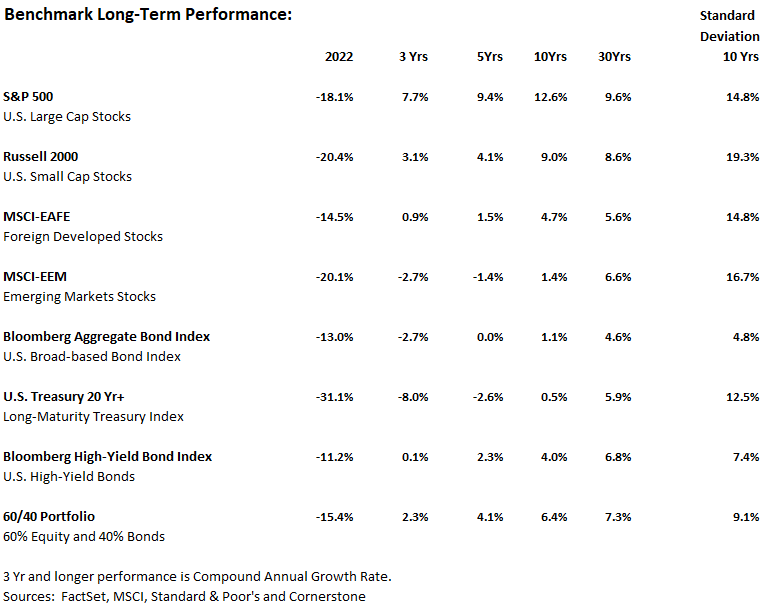





 Cornerstone Investments