Mother Teresa and the Insurrectionists:
What do Mother Teresa and the January 6th, 2021 insurrectionists in our nation’s capital have in common? Obviously, not much. Mother Teresa (1910-1997) was a Roman Catholic nun widely recognized for her sacrificial Christian service and humility. She stepped away from living in a convent and found her calling to serve the poorest of the poor in India, those with leprosy, AIDS, other maladies and the dying. Meanwhile, some of the insurrectionists espoused Christian nationalism and some carried signs that said: “Jesus Saves,” “In God We Trust,” and “Make America Godly Again.” These messages were carried by a relatively small number of participants, but they received widespread attention and criticism. Many Christian leaders denounced the insurrection as blasphemous, unpatriotic and they argued that such displays were antithetical to the teachings of Jesus Christ. It is clear that there is quite a contrast between Mother Teresa and the insurrectionists.
Religion was once viewed as an overwhelmingly positive force in American society, but perceptions are changing. According to a 2019 Pew Research survey, 55% of Americans believe churches and religious organizations do more good than harm in American society, 20% say it does more harm than good, and 24% say it makes no difference. Regardless of various viewpoints, there is much evidence that Christianity has played an outsized role throughout history, often good and but sometimes bad.
Given widely differing perspectives related to Christianity, it is interesting to ask:
-What is the impact on civilization of Christianity and
-what would the world be like if Jesus never existed?
See More: (For Email.) Maybe another header for actual post?
This post examines Christianity’s role within our civilization and our capitalistic system. Implicit in this review is the counterfactual of how our civilization and capitalistic system would be different if there was no Jesus or Christianity. Granted, this is hypothetical, but it is a thought-provoking question.
A number of topics are explored, starting with the Good, the Bad and the Ugly.
To begin, it is important to state that Christianity’s foundation is based on the belief that humans are created in the image of God (“imago Dei”) and have infinite value and dignity. Key attributes include unconditional love, grace and mercy, forgiveness, service, repentance, redemption, and humility. Marriage and the family are paramount.
The post starts with the Good, the Bad and the Ugly, and then delves deeper into a wide range of topics.
This is a Long Read and topics are Bolded so you can scroll down to view the subjects and content that appeal to you. Subjects are also “Anchored” so you can go directly to specific topics and content.
<a href=”https://wordpress.com/page/cornerstoneinvestmentsllc.com/php#Good”><strong>The Good</strong></a></p>
Topics:
Introduction/Overview
The Bad & The Ugly
The Good
Goodness Multiplier
The Bible’s Impact
Charitable Giving
Slavery and Racial Justice
Historical Legacy
Education
Health Care and Social Reforms
Music, Literature and Art
Missionaries Large Role
Secular Decline
Spiritual Capital
Capitalism
Take-Aways & Highlights
It is important to note that Christianity is typically covered in the topics where possible, but at times broader terms like religion or spirituality are more applicable. The topics argue for a positive impact from Christianity.
The Bad and the Ugly:
When considering the Good, the Bad, and the Ugly, the Bad and the Ugly are covered first.
An examination of the Christian impact on civilization requires recognition and acknowledgement of the negative impact: judgment, hypocrisy, hatred, bigotry, racism, xenophobia, misogyny, greed, child abuse, oppression, homophobia, white supremacy, and anti-Semitism. The scandalous child molestation cases, secrecy and coverup that were first exposed by the Boston Globe’s spotlight investigation in the early 2000s are particularly heinous.
Some critics highlight a narrative where Christians are self-absorbed, materialistic consumers, in a quest for personal satisfaction and self-fulfillment and being blinded by worldly success. Christians are seen as apathetic towards poverty, racial injustice and environmental risks. The critique also includes past support of slavery, ongoing racism and capitalism that increases income inequality. Moreover, parishioners are seen with an inward focus as consumers of church services rather than an outward focus on service and missions. Finally, some describe Christians as narrow-minded and out of touch with contemporary society. These values and behavior are seen as anathema to professed values.
Others point out the Bible’s Old Testament passages that show God’s anger and wrath. Prominent atheists, such as Richard Dawkins, the late Christopher Hitchens, Karl Marx, Sigmund Freud, and Bertrand Russell, have criticized Christianity as a repressive force against the advancement of civilization, an opiate of the masses, a tool of exploitation, an illusion, a crutch, a source of guilt and pathologies, and the principal enemy of moral progress in the world.
Many of these criticisms have merit, but these portrayals often reflect the actions of individuals who identify as Christian, but do not act as Christians. In addition, some of these characterizations are quite subjective and are an unfair representation of Christianity as a whole, and many of these points could be leveled against a broad swath of American society, regardless of their level of religious practice.
Nevertheless, when considering these examples, you might ask what’s to like?
The Good:
Benefits to the individual: Despite various critics, issues and shortcomings listed above, there are significant benefits to both individuals and to society in relation to religious practices and involvement.
For individuals, there are numerous studies showing that religious practices, prayer, meditation, regular worship attendance and forgiveness are associated with greater happiness, longevity, healthier behaviors, reduced stress, greater civic involvement, less depression and less suicide.
For example, Pew Research shows that in the U.S. 36% of the actively religious people describe themselves as “very happy,” compared with 25% of the inactively religious and 25% of the unaffiliated. In addition, people who attend religious services at least monthly often are more likely than those unaffiliated to join other types of nonreligious organizations, such as charities and clubs. Ohio State researchers found similar results as published in the journal Social Psychological and Personality Science. According to the study, Christians who prioritize their relationship with God and engage in positive religious experiences have greater longevity, higher levels of psychological well-being and purpose in life. Religions also promote stress-reducing practices including gratitude, prayer and meditation. Part of the increased longevity came from the fact that many religiously affiliated people had strong social networks, belonged to social organizations and volunteered more. The study was supported by grants from the National Science Foundation and the National Institutes of Health.
The level and type of spirituality also helps with well-being according to Martin Seligman, a well-known positive psychologist, who is Professor of Psychology at the University of Pennsylvania’s Department of Psychology. Seligman differentiated between extrinsic and intrinsic religiousness in his publication “Religion of the Heart: A Study of Intrinsic Religion.” Extrinsic religiousness exists where individuals use religion as a means to achieve external goals, such as social status, material rewards, or social support. In this case, religion is seen as a tool for achieving specific outcomes, rather than as an end in itself. Intrinsic religiousness refers to the extent to which individuals hold religious beliefs and values as personally important and meaningful. In this case, religion is an end in itself, rather than a means to an end. Seligman found a positive link between religiosity, particular religious involvement, and psychological and physical well-being. This included optimism, meaning and purpose, social support and social capital. Seligman says that intrinsic religiousness is more strongly associated with positive outcomes such as well-being, life satisfaction, and happiness, while extrinsic religiousness is more weakly associated with these outcomes, and may even have negative effects on well-being in some cases.
A recent study led by researchers at the Harvard T.H. Chan School of Public Health and Brigham and Women’s Hospital is another definitive analysis that shows the importance of spirituality for healthcare. The study says that spirituality should be incorporated into care for both serious illness and overall health, according to a 2021 article published in the American Journal of Epidemiology entitled Religious Service Attendance and Implications for Clinical Care, Community Participation, and Public Health. The study is part of the Initiative on Health, Spirituality, and Religion at Harvard that focuses on exploring the intersection of health, spirituality, and religion through research, education, and collaboration. This study represents the most rigorous and comprehensive systematic analysis of the modern-day literature regarding health and spirituality to date according to Tracy Balboni, lead author and senior physician at the Dana-Farber/Brigham and Women’s Cancer Center and professor of radiation oncology at Harvard Medical School.
In a blog about the research in Psychology Today and in the Human Flourishing newsletter, Tyler J. VanderWeele, director of that program, noted “strong evidence that religious service attendance was associated with lower mortality risk; less smoking, alcohol and drug use; better mental health; better quality of life; fewer subsequent depressive symptoms and less frequent suicidal behaviors.” He wrote that studies suggest those who attend religious services frequently enjoy a 27% lower risk of dying and 33% lower odds of subsequent depression.
The study, built upon good study designs and rigorous analysis, showed that for healthy people, spiritual community participation — as exemplified by religious service attendance — is associated with healthier lives. For many patients, spirituality is important and influences key outcomes in illness, such as quality of life and medical care decisions. Consensus implications included incorporating considerations of spirituality as part of patient-centered health care and increasing awareness among clinicians and health professionals about the protective benefits of spiritual community participation. Put simply, religious participation is an important determinant of health: it is strongly associated, over time, with a variety of positive health outcomes.
Key findings:
– There is evidence for service attendance being strongly associated with lower mortality, less depression, and lower likelihood of suicide.”
– Religious participation contributes to physical and mental health, and subjective wellbeing,
through shaping behavior, creating systems of meaning, altering one’s outlook on life, building community and social support, supporting moral beliefs, and through an experience of the transcendent.
– Communal forms of religious participation, rather than merely private practices, most powerfully affect health.
– Overlooking spirituality leaves patients feeling disconnected from the health care system and the clinicians trying to care for them. Integrating spirituality into care can help each person have a better chance of reaching complete well-being and their highest attainable standard of health.
– Other studies have examined meaning and purpose and the vast majority of these have suggested
that various forms of religious participation and service attendance are associated with a
greater sense of meaning or purpose in life.
– Research literature suggests that forgiveness itself is closely tied to health.
– Caregiving from religious communities as an important pathway to health and wholeness. The very notion of love as seeking the good of another entails caring for those in need; caring for those who are ill and seeking their health and healing was a prominent theme in its own right.
Interestingly, the study notes that “While causality cannot be definitely established, the evidence that some of the association is causal seems fairly strong.” Numerous mechanisms have been suggested for what might be responsible for the associations between religious participation and health. “Social support, less smoking, lower depression, greater self- regulation, hope and optimism, and meaning and purpose may be potential mechanisms, and some empirical evidence says that some of these might indeed explain some of the relationship.” Other mechanisms suggested that relate religious participation to better mental health include better physical health, comfort from religion, systems of meaning, and relaxation of nervous system through prayer/meditation.
The Harvard analysis shows that religious participation affects health, and that religious institutions play an important role in the provision of health care and public health services. Religious participation, on these grounds, thus ought to be included in discussions of, and analyses of, health, as is already common practice for other social determinants of health such as race, gender, or income. This research was supported by the John Templeton Foundation. In conclusion, numerous studies have shown a relationship between religious activities and regular church attendance and various positive aspects of overall well-being and health. It is important to note that correlation does not equal causation, but some studies do infer causality.
Notable Individuals and Morality: In addition to the benefits listed above, there are noteworthy individual Christians who articulated and demonstrated high levels of morality that lifted up and inspired greater goodness within the overall population. They have provided the benefits of a moral conscience in times of great distress and war by calling out despicable behavior involved in an immoral war. These individuals also help the general population in more mundane, everyday life to aspire to higher levels of behavior.
Education:
I want to go to AnchDest1.
As the Fed belatedly recognized the error of the “transitory” inflation narrative, they raised short-term interest rates by 4.25% during the course of 2022-the fastest pace since the Volcker era some 40 years ago. Hopefully, the current policy to normalize interest rates can be accomplished in a shorter time frame, and without severe economic consequences.
Market Consensus Outlook for 2023:
Benefits to the individual: Despite various critics, issues and shortcomings listed above, there are significant benefits to both individuals and to society in relation to religious practices and involvement.
For individuals, there are numerous studies showing that religious practices, prayer, meditation, regular worship attendance and forgiveness are associated with greater happiness, longevity, healthier behaviors, reduced stress, greater civic involvement, less depression and less suicide.
Here is a 10th attempt for documenting a URL for Pew Research and then continuing on, hopefully with Open in New Tab-No.
Here is a 9th attempt for documeenting a URL for Pew Research and then continuing on.
AnchDest1.
He wrote that studies suggest those who attend religious services frequently enjoy a 27% lower risk of dying and 33% lower odds of subsequent depression.
The study, built upon good study designs and rigorous analysis, showed that for healthy people, spiritual community participation — as exemplified by religious service attendance — is associated with healthier lives. For many patients, spirituality is important and influences key outcomes in illness, such as quality of life and medical care decisions. Consensus implications included incorporating considerations of spirituality as part of patient-centered health care and increasing awareness among clinicians and health professionals about the protective benefits of spiritual community participation.
Put simply, religious participation is an important determinantof health: it is strongly associated, over time, with a variety of positive health outcomes.
Key findings:
– There is evidence for service attendance being strongly associated with lower mortality, less depression, and lower likelihood of suicide.”
– Religious participation contributes to physical and mental health, and subjective wellbeing,
through shaping behavior, creating systems of meaning, altering one’s outlook on life, building community and social support, supporting moral beliefs, and through an experience of the transcendent.
– Communal forms of religious participation, rather than merely private practices, most powerfully affect health.
– Overlooking spirituality leaves patients feeling disconnected from the health care system and the clinicians trying to care for them. Integrating spirituality into care can help each person have a better chance of reaching complete well-being and their highest attainable standard of health.
– Other studies have examined meaning and purpose and the vast majority of these have suggested
that various forms of religious participation and service attendance are associated with a
greater sense of meaning or purpose in life.
– Research literature suggests that forgiveness itself is closely tied to health.
– Caregiving from religious communities as an important pathway to health and wholeness. The very notion of love as seeking the good of another entails caring for those in need; caring for those who are ill and seeking their health and healing was a prominent theme in its own right.
Interestingly, the study notes that “While causalitycannot be definitely established, the evidence that some of the association is causal seems fairly strong.” Numerous mechanisms have been suggested for what might be responsible for the associations between religious participation and health. “Social support, less smoking, lower depression, greater self- regulation, hope and optimism, and meaning and purpose may be potential mechanisms, and some empirical evidence says that some of these might indeed explain some of the relationship.” Other mechanisms suggested that relate religious participation to better mental health include better physical health, comfort from religion, systems of meaning, and relaxation of nervous system through prayer/meditation.
The Good
The Harvard analysis shows that religious participation affects health, and that religious institutions play an important role in the provision of health care and public health services. Religious participation, on these grounds, thus ought to be included in discussions of, and analyses of, health, as is already common practice for other social determinants of health such as race, gender, or income.
This research was supported by the John Templeton Foundation.
ps://cdn1.sph.harvard.edu/wp-content/uploads/sites/603/2019/01/ReligionHealthSynthesis.pdf
In conclusion, numerous studies have shown a relationship between religious activities and regular church attendance and various positive aspects of overall well-being and health. It is important to note that correlation does not equal causation, but some studies do infer causality.
Takeaways and Highlights
Jeff Johnson, CFA Jeffrey A. Johnson
January 2, 2023
This is text that I have typed.The U.S. stock market
This is the second line that I have typed. More text typed.
Go to A Test Page Jan 6 and See More to Place Anchor7.
Here is another line after block above.
This is where I want to make the Origin for the AnchorDestination:
This is where I want to make a Jump To 2 Anchor Destination:
Go to a AA Test Anchor Destination
Second attempt to develop anchor in another page:

 This is called “a test page”.
This is the Starting Point where I want to Jump From.This is how to use.
This is the JJ Starting Point where I want to Jump From so that I can go to a test4 JP Morgan.
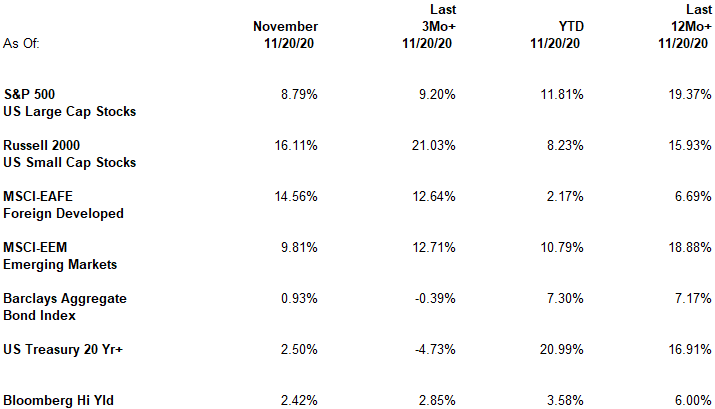
| Last | Last | |||||||||
| November | 3Mo+ | YTD | 12Mo+ | |||||||
| As Of: | 11/16/20 | 11/16/20 | 11/16/20 | 11/16/20 | ||||||
| S&P 500 | 10.92% | 11.33% | 13.99% | 21.69% | ||||||
| US Large Cap Stocks | ||||||||||
| Russell 2000 | 16.05% | 20.96% | 8.17% | 15.87% | ||||||
| US Small Cap Stocks | ||||||||||
| MSCI-EAFE | 14.17% | 12.25% | 1.82% | 6.32% | ||||||
| Foreign Developed | ||||||||||
| MSCI-EEM | 9.54% | 12.44% | 10.51% | 18.59% | ||||||
| Emerging Markets | ||||||||||
| Barclays Aggregate | 0.37% | -0.94% | 6.70% | 6.57% | ||||||
| Bond Index | ||||||||||
| US Treasury 20 Yr+ | 0.13% | -6.93% | 18.20% | 14.21% | ||||||
| Bloomberg Hi Yld | 2.43% | 2.86% | 3.59% | 6.01% | ||||||

col1 |
col2 |
col3 |
| item11 | item21 | item31 |
| item12 | item22 | item32 |
| As Of: | 6/30/18 | 6/30/18 | ||
| S&P 500 | 3.44% | 2.65% | ||
| Russell 2000 | 7.75% | 7.66% | ||
This is the Anchor Destination.
This is the second Anchor Destination.
This is towards the end.
 Cornerstone Investments